

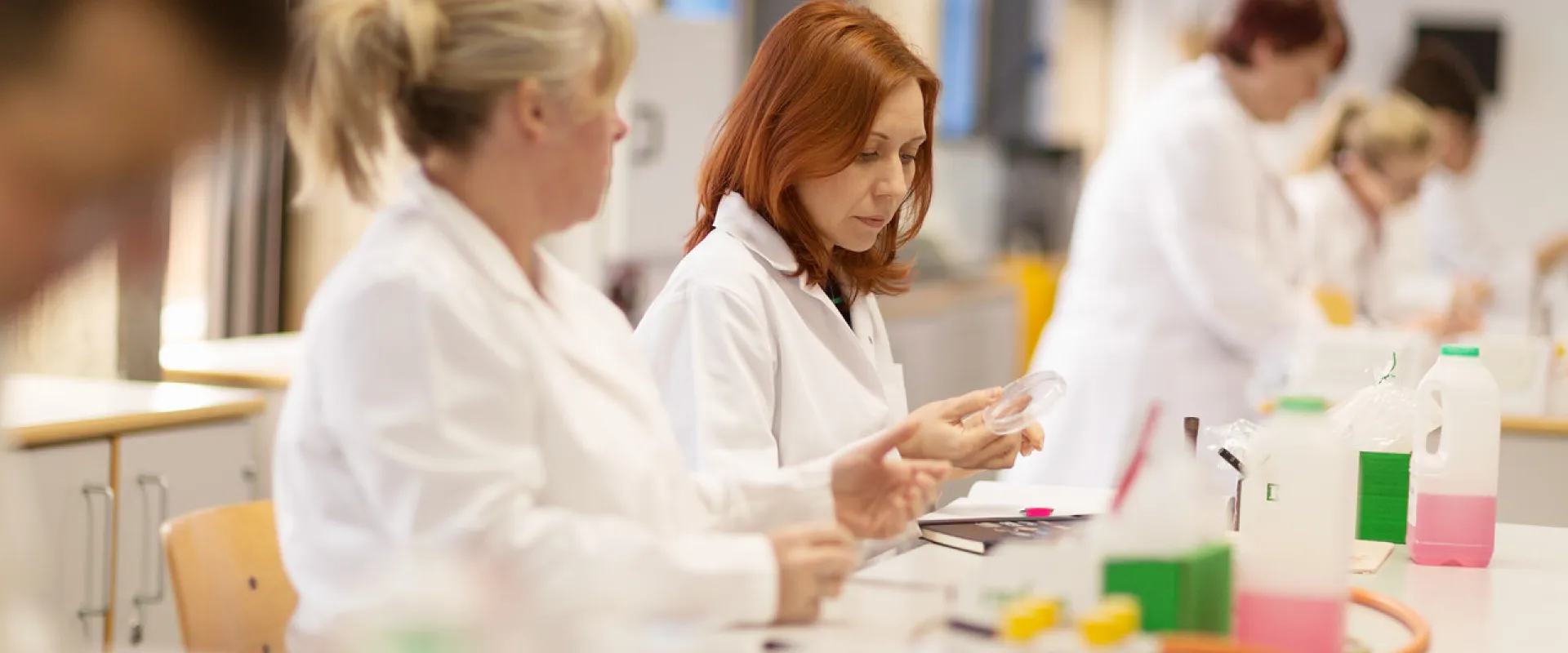
Our expertise & pipeline
We work with UCL researchers from all departments, and have a diverse pipeline of technologies on their way to market.
For over 30 years, we’ve built a sustained engine of commercial success that spans every discipline at UCL.
As trusted advisors, we identify exceptional research with the greatest potential for real‑world impact, and help translate them into real-world ventures and licensing deals, so that these ideas can benefit society at scale.

Your expert partners
Combining scientific expertise with commercial know-how
Our work is led by specialist teams, many with senior academic experience themselves, who understand the complexity and ambition of UCL’s research.
Their expertise spans BioPharmaceuticals, and Physical Sciences & Engineering, while our Social Ventures team works with the rest of the university's departments.
Meet our teamWorking with researchers from all disciplines
UCL Ventures partners with academics, researchers and clinicians from all departments and our partner hospitals (University College London Hospitals, Great Ormond Street Hospital, Moorfields Eye Hospital, the Royal Free London, and the Royal National Orthopaedic Hospital).
No matter your field or discipline, our team of experts are ready to work with you to find the best path forwards.

Our therapeutics pipeline
Our pipeline of pre-clinical and clinical therapeutics is on a scale comparable with a global pharmaceutical company, spanning novel immunotherapies and gene therapies, to HRT.
They are illustrated below with the various stages of clinical development, including those in progress and those already marketed.* These therapeutics originate from academic clinicians and researchers at UCL and its partner hospitals.
Phase 1a
1 Programme

A potential first-in-class, investigational G-Quadruplex (G4)-selective transcription inhibitor designed for advanced or metastatic solid tumours. Currently being trialled in pancreatic cancer.
Pancreatic cancer is more common in older people: more than 45% of people diagnosed are 75 and over. In England, pancreatic cancer is more common in people living in more deprived areas.
It is more common in White and Black people than in Asian people and in people of mixed or multiple ethnicity.
Phase 1B
10 Programmes

A gene therapy to restore cone function via subretinal injection to cone receptors in the back of the eye. It was designed with a synthetic promoter associated with strong gene expression, to account for the larger amount of protein needed to restore cone function in achromatopsia (ACHM) patients with a CNGA3 gene mutation (~1 in 30,000 and 30-40% cases).
ACHM causes complete colour blindness, extreme light sensitivity, involuntary eye movements (nystagmus), and severely reduced visual acuity.
A gene therapy to restore cone function via subretinal injection to cone receptors in the back of the eye. It is indicated in adults and children with achromatopsia caused by mutations in the CNGB3 gene (~1 in 30,000; 40-50% of cases).
ACHM causes complete colour blindness, extreme light sensitivity, involuntary eye movements (nystagmus), and severely reduced visual acuity.
A gene therapy in which the expression of a codon-optimised RPE65 gene is driven by a novel synthetic retinal pigment epithelium (a thin layer of cells at the back of the eye) cell-specific promoter.
The RPE65 protein is essential for rod function because it recycles the light sensing machinery in rod photoreceptors. A deficiency of RPE65 results in Leber congenital amaurosis (LCA), which occurs in 2 to 3 per 100,000 newborns. It is one of the most common causes of blindness in children.

CAR T-cell therapy targeting CD19 and CD22 expressing cells for paediatric Acute Lymphocytic Leukaemia (ALL), the most common form of childhood leukaemia and accounts for around 30% of all paediatric cancers.
In ALL, the bone marrow makes too many lymphocytes (a type of white blood cell).
CAR T-cell therapy targeting cells expressing the T-cell receptor β-chain constant domain 1 (TRBC1). It is indicated for peripheral T-cell lymphoma (PTCL), a subtype of non-Hodgkin’s lymphoma - defined as a diverse group of aggressive lymphomas that develop from mature-stage white blood cells called T-cells and natural killer (NK) cells.
PTCL is <1 case per 100,000 people in the United States.
A CAR T-cell therapy targeting cells expressing CD19 and B-cell maturation antigen (BCMA) for multiple myeloma. This bone marrow cancer often affects several areas of the body, such as the spine, skull, pelvis and ribs.
The incidence of multiple myeloma is 4.5-6.0 per 100,000 people per year and the mortality rate is 4.1 per 100,000.

β-Glucocerebrosidase (GBA) AAV gene therapy for the treatment of Gauchers disease (or GBA deficiency).
Gauchers affects 1 in 40,000 people, but in the Ashkenazi Jewish population, it affects 1 in 450 people.

A first-in-class bispecific T-cell engager, which targets ROR1 tumours, killing cancer cells without depleting B cells. Initially focused on haematological malignancies such as Chronic Lymphocytic Leukaemia (CLL) to establish proof of concept prior to moving to hard-to-treat solid tumours.
CLL is the most common adult leukaemia (~38% of cases).

A lentiviral ex vivo autologous gene therapy for mucopolysaccharidosis type I (MPS-I) or Hurler syndrome. An enzyme deficiency (alpha-L-iduronidase (IDUA) lysosomal enzyme) leads to a build-up of sugar molecules (glycosaminoglycans or GAGs )across across organs. This causes systems including neurocognitive impairment, skeletal deformity, loss of vision and hearing, and cardiovascular and pulmonary complications. It affects 1 in 25,000.

Cell-based treatment for Wet Age-Related Macular Degeneration (Wet AMD). This is blurred vision or a blind spot in the central vision, usually caused by blood vessels that leak fluid or blood into the macula. Retinal pigment epithelium (RPE) cells die leading to the blind spot, but this treatment re-introduces healthy RPE.
Affects c.165 million people globally.
Phase 2
2 Programmes

Oral formulation of Ornithine Phenyl Acetate (OP) for the treatment of Hepatic Encephalopathy (HE). HE occurs when a patient is in liver failure and there is an ammonia build-up in the brain which leads to brain swelling, cognitive impairment and death. OP is an ammonia lowering agent. 62% of hepatic cirrhosis patients have HE.

TLR4 antagonist for the treatment of acute liver failure, which reduces inflammation. Fewer than 10 cases per 1,000,000 in the developed world.
Phase 3
4 Programmes
An AAV-based gene therapy to treat the most common form of X-linked retinitis pigmentosa (XLRP), an incurable form of genetic blindness in men (~1 in 15,000). Caused by mutations in RPGR ORF15 gene; both rods and cones photoreceptors require RPGR ORF15 to function.

Adenosine deaminase (ADA) deficiency is an inherited disorder causing severe combined immunodeficiency (SCID). Patients have virtually no immune protection against bacteria, viruses and fungi.
It affects 1 in 1,000,000 newborn children.
IV formulation of Ornithine Phenyl Acetate (OP) for the treatment of Hepatic Encephalopathy (HE). HE occurs when a patient is in liver failure and there is an ammonia build-up in the brain which leads to brain swelling, cognitive impairment and death. OP is an ammonia lowering agent.
There are currently 62,000 cases per 100,000 patients with hepatic cirrhosis.

Ridinilazole (previously known as SMT19969) is an investigational small molecule antibiotic for oral administration to treat Clostridioides difficile infection (CDI). CDI is a hospital-acquired infection and occurs in 8.3 patients per 10,000 admissions.
Launched
5 Programmes
A CAR T-cell therapy using CD19 as the target. It is indicated for the treatment of adult Acute Lymphocytic Leukaemia (ALL), a type of cancer in which the bone marrow makes too many lymphocytes (a type of white blood cell).
The estimated worldwide annual incidence of adult ALL is about one in 100,000.

Kogenate Bayer is used for the treatment and prevention of bleeding in patients of all ages with haemophilia A (an inherited bleeding disorder caused by lack of factor VIII, a clotting protein). It contains the active substance octocog alfa (human coagulation factor VIII).

An oncolytic herpes simplex virus (HSV-1) expressing genetically-modifiedCSF for the treatment of various tumours. It is designed to selectively replicate inside cancer cells and destroy them, while simultaneously stimulating the patient's immune system to attack other tumours.
It is sold by Biovex / Amgen.

Basiliximab (trade name Simulect) is a chimeric mouse-human monoclonal antibody to the α chain (CD25) of the IL-2 receptor of T-cells. It is used to prevent rejection in organ transplantation, especially in kidney transplants. It is sold by Novartis.

Used to treat narcolepsy in adults, adolescents and children from six years of age by increasing histamine levels in the brain.
Narcolepsy is a long-term sleep disorder, which affects the brain’s ability to regulate the normal sleep-wake cycle. This leads to symptoms such as an irresistible urge to sleep, even at inappropriate times and places, and disturbed night-time sleep. Some patients also have episodes of severe muscle weakness (cataplexy) that can cause collapse.
*Many of these assets have been partnered with commercial organisations, which are responsible for advancing them through clinical trials and ultimately bringing them to market for the benefit of patients.
Want to take your idea further?
No matter your academic background or department, our team of experts are ready to help you take the next steps.
Tell us about your researchOur Social Ventures highlights
Our Social Ventures are bringing about social progress and community transformation.
We support academics to form businesses, whose profits are exclusively devoted to helping communities solve specific challenges, and individuals to overcome personal challenges, or licenses to help take impact further.

Social Ventures, Public & population health
Trim Tots CIC
Healthy lifestyle programme addressing childhood obesity.

Social Ventures, Women’s & reproductive health
Wellspring
Platform personalising information and consent in women's health.

Social Ventures, Community engagement
Mapping for Change
Participatory and community mapping projects.
Success stories and real-world impact
See how UCL research is changing the way we live, work and thrive - from businesses, to patients and communities

Real-world impact
MyCardium: transforming heart disease diagnosis with real time, AI-powered imaging
Using human-in-the-loop AI analysis of cardiac images to make it faster, cheaper and easier to test for heart disease.

Real-world impact
Spur Therapeutics: one-time gene therapies to free patients from lifelong treatment
New 'plug and play' gene therapies to treat disorders including Haemophilia B, Fabry, and Gaucher disease.

Real-world impact
Gigaton: protecting communities and the climate by cutting industrial emissions
The founders were concerned about the escalating climate crisis, and frustrated by the lack of global action.
Common questions
Yes - we work with all staff, researchers and clinicians from UCL and our partner hospitals.
If you'd like to understand if your particular area of research has commercial potential, get in touch with our team here.
Each Business Manager is assigned to specific departments across UCL, giving them a strong understanding of the research taking place in your field. They are also scientists, engineers or entrepreneurs themselves, so they understand both the detail of your work and the broader context it sits within.
This combination means they are well placed to act as advisors, helping you explore how your research could develop, while recognising its potential and respecting your priorities as a researcher.
We welcome early-stage conversations, no matter how far you have developed your idea, hypothesis or project.
If your work is in its infancy, our Business Managers may even be able to offer advice on how to best make it commercially viable from the outset.
Find your Business Manager here.
Your idea has potential...
... we can help you take it further.
Speak to UCL Ventures to understand how your research could go to market, to change lives, businesses and communities.