Gigaton: protecting communities and the climate by cutting industrial emissions
The founders were concerned about the escalating climate crisis, and frustrated by the lack of global action.
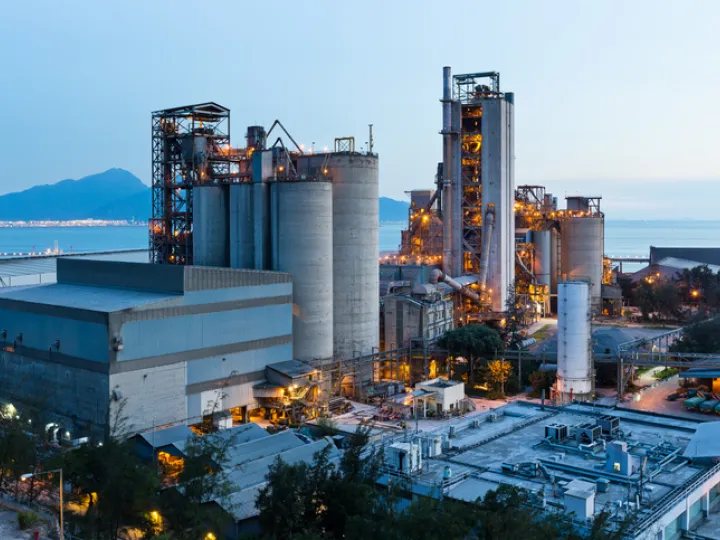
Problem to be solved
Cement production accounts for around 8% of global CO2 emissions and is widely considered ‘hard to abate’. Kilns are complex, volatile environments where small day-to-day inefficiencies translate into major fuel use and emissions - and where increased use of alternative fuels can introduce even more variation. As CEO Buffy Price puts it: “Cement plants are highly volatile, highly complex environments.”
Solution
Carbon Re applies AI to optimise cement kiln operations in real time. Its ‘free lime’ model analyses data from thousands of sensors to make rapid predictions that help operators fine-tune performance, rather than waiting for laboratory results before making adjustments. The impact can be significant: even a 2-3% reduction in fuel use can save hundreds of tonnes of fuel - and CO2 - per month at a single plant.
From idea to impact
Founded during the second COVID lockdown in 2020 by friends Buffy Price and Sherif Elsayed-Ali, Gigaton - initially named Carbon Re - teamed up with Dr. Daniel Summerbell (Cambridge Institute for Manufacturing) and Dr. Aidan O’Sullivan (UCL Energy Institute) to tackle the cement industry challenge. A pre-seed round in October 2021 raised over £1m, enabling the team to hire and scale.
One early advantage was a product designed for remote deployment: “The product is cloud-based and can be deployed remotely because we had to operate that way and this has made it easy for us to operate globally. We were lucky to get a pilot very early on, which was a plant in India,” says Buffy.
With live customers across Europe and South America, the team can have models ‘plugged in’ and running within about a week, followed by a customisation and training period of up to three months (with an ambition to reduce this to around eight weeks).
How UCL Ventures helped
As a spinout linked to UCL and Cambridge, Gigaton benefited from the practical support that helps ambitious teams move quickly - including introductions, guidance and visibility that helped the company build momentum with early pilots and customers. UCL Ventures supported the commercialisation journey and helped connect Gigaton to relevant networks, while the UCL Technology Fund (UCLTF) has been a major investor, bringing deep pockets and long-term commitment as the company scaled.
As Will Mortimore, Senior Business Manager, Physical Sciences & Engineering, UCL Ventures, says: “It took a visionary, pragmatic approach to see that the cement industry, a gigantic manufacturer of CO2, will be with us for years until a viable alternative is available. Gigaton's mission is to help these manufacturing plants make cement at their least CO2 emitting best, every day.
“Gigaton brings a fusion of expert AI skills from UCL combined with cement manufacturing know-how from Cambridge. The team has attracted amazing IT and industry talent to help develop the models needed to support and integrate innovative solutions into the cement industry. It’s making a big difference.”
Buffy also highlights the value of university credentials and connections: “As a new emerging company, having these credentials is priceless. We’ve also benefited in lots of other ways - accessing funding, support with marketing and promotion and finding talent. Plus opening doors - I met the Chancellor [of the Exchequer] through a UCL Ventures event, so being able to leverage that reputation is very valuable.”
Where is Gigaton now?
Following a seed round in October 2022 that raised £4.2m, Gigaton has grown a mission-driven team of software engineers, AI experts and salespeople with deep industry knowledge.
As Buffy notes: “Recruiting and managing people can be one of the hardest things about running any business, but I’ve been so happy to work with this team. They are all passionate and brilliant, and they work so hard because they really care about our mission.”
With ambitions to scale rapidly - including a target to get ‘five live by 2025’ ahead of a Series A - the team is focused on refining models to demonstrate consistent emissions reductions (5% as a near-term goal, with scope to layer on additional models for 10-15% over time). And the opportunity extends beyond cement: steel and glass manufacturing also use pyro processing, making them ripe for the same AI-led interventions.
Ultimately, the goal is climate impact at scale: “I want to put the number on my epitaph of how much carbon we’ve saved,” says Buffy. “I want it to be gigatonnes.”