

Neuroharmonics trialling non-invasive ultrasound therapy for essential tremor
First patient trial uses soundwaves to reach deep brain structures without surgery or implants.
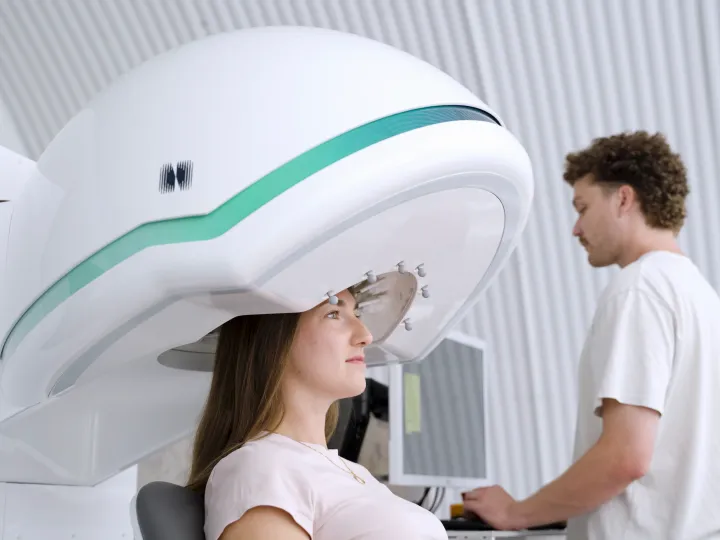
After a decade of UCL research, and less than two years from spinout to patient study, NeuroHarmonics has received approval to begin its first patient trial of a non-invasive deep-brain ultrasound therapy to treat essential tremor.
This condition causes involuntary shaking, most commonly in the hands and arms, which can make everyday activities such as writing, eating and drinking difficult.
The trial, supported by £1.2m from Innovate UK's Biomedical Catalyst programme, was approved by the Medicines and Healthcare products Regulatory Agency (MHRA) and a Research Ethics Committee. It will take place at the National Hospital for Neurology and Neurosurgery (NHNN) in Queen Square, London.
Addressing an unmet need in essential tremor
Essential tremor is one of the most common movement disorders in the UK, affecting 1% of the population and around 1 in 5 people over 65. While medications can help some people, many patients continue to experience significant symptoms.
Another treatment option is deep brain stimulation (DBS), which involves implanting electrodes into the brain, and MRI-guided focused ultrasound, which targets a pea-sized area deep within the brain, effectively turning off the essential tremor symptoms. Whilst this approach can be highly effective, it requires specialist brain surgery and implants.
What is the ultrasound technology?
NeuroHarmonics technology uses low-intensity ultrasound - carefully controlled and focused sound waves delivered through an array built into a device that surrounds the skull. The sound waves pass through the skull and are focused on the same pea-sized area of the brain targeted by conventional invasive approaches.
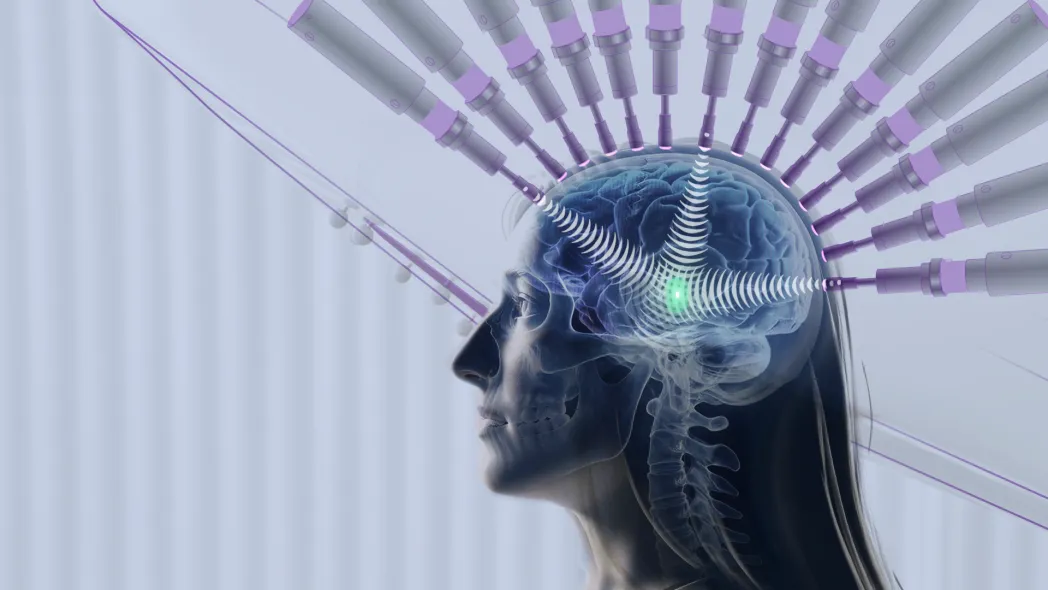
Because no invasive surgery or anaesthesia is required, treatment can to take place in an outpatient setting clinic, with patients seated comfortably in a chair.
From laboratory discovery to clinical investigation
Part of the scientific foundation for this technology came from UCL research, which demonstrated that ultrasound could selectively stimulate a single deep-brain structure with millimetre-level precision. The study will be led by Dr. Anna Latorre, Consultant Neurologist at the National Hospital for Neurology and Neurosurgery (NHNN) and Honorary Associate Professor at the UCL Queen Square Institute of Neurology.
The trial will enrol adults whose essential tremor is not adequately controlled by, or who cannot tolerate, first-line medications. Conducted at the Leonard Wolfson Experimental Neurology Centre Clinical Research Facility (part of NHNN), the study will investigate whether the technology can safely engage the intended brain region and produce measurable effects on tremor.
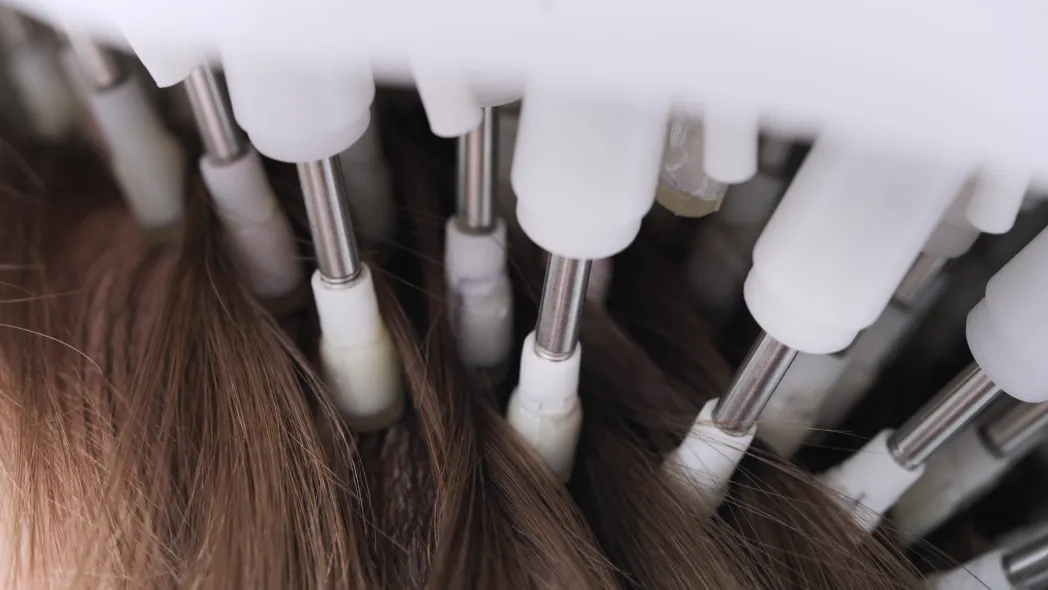
Ten patients are expected to be enrolled in this initial study, which aims to assess safety, tolerability and target engagement. It is not designed to prove long-term effectiveness, and any changes in tremor are expected to be temporary.
Larger clinical studies will be needed to explore future therapeutic benefit.
UCL Ventures’ role
UCL Ventures helped NeuroHarmonics with building the business plan, supporting investor discussions and enabling the company to secure investment from UCLTF and other investors as well as licensing the relevant IP.
Dr. Weng Sie Wong, Senior Business Manager at UCL Ventures, added: "NeuroHarmonics is a powerful example of what can happen when world-class research is combined with the right commercialisation support, expertise and investment. Reaching a first patient study for such a prevalent condition is a significant milestone, not only for the company but for the people around the world who could ultimately benefit from this technology.”
A milestone for UCL innovation
NeuroHarmonics is backed by Speedinvest, UCL Technology Fund, Fusion Fund and Jumpspace Ventures, and licenses technology from UCL Ventures, UCL's expert commercialisation partner.
Dr. Bradley Treeby, Chief Executive Officer and Co-founder of NeuroHarmonics, and Honorary Professor of Biomedical Ultrasound at UCL, said: "We have known for decades exactly which brain structure is involved in essential tremor. The challenge has always been engaging that target without surgery.
"In under two years, our team has designed and built a completely new platform to do that from a chair, with no surgery and no need to lie in a scanner during treatment. Taking it into patients at Queen Square is the moment everything we have built gets its first real test."
If you’re a UCL researcher, academic or clinician at a UCL partner hospital and are interested in exploring how your research can go beyond the university, contact us for a confidential, no-obligation chat - whatever stage your research is at.
Team

Dr Brad Treeby
Co-founder and CEO
Dr Treeby has spent the last decade working on how to focus ultrasound through the skull and into the brain to modulate neural activity.
He has helped build k-Wave (an open-source simulation
toolbox), designed new transducer arrays, and ran the first human studies demonstrating millimetre-scale targeting of deep brain structures without surgery. He left academia to solve problems like these full time.

Dr Weng Sie Wong
Senior Business Manager
Dr Wong brings extensive experience of all aspects of university technology transfer activities from strategic IP management to licence negotiations and spinout formation.
As a Senior Business
Manager focusing on the commercialisation of medical technologies, healthcare engineering, medical imaging and AI-enabled healthcare innovations arising from UCL research, she has been involved in the formation of multiple spinouts and acted as a director on various boards.
Prior to joining UCL Ventures, Dr Wong was a senior technology transfer manager at Oxford University’s TTO, Oxford University Innovation, working on a diverse range of both life and physical science projects over a 10-year period.
Weng holds an MBA from Edinburgh University and a PhD in pharmacology from UCL.