
Seed funding will bring Cascader’s pioneering AI eye care closer to reality
Investment will accelerate the translation of world-leading ophthalmology research into clinical practice
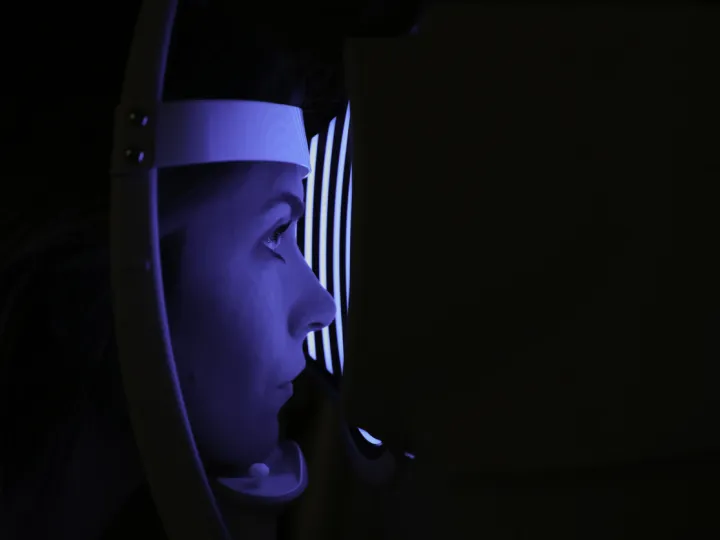
A new UCL Ventures-supported spinout is taking the next step towards transforming the detection and management of eye disease.
Cascader a medical technology company applying artificial intelligence (AI) to oculomics and eye care, has completed a seed funding round led by Topcon Healthcare, Inc.
The investment will support the development of Cascader's first products, expand its team, and accelerate the delivery of AI technologies designed to help clinicians diagnose and manage eye disease more effectively.
Cascader was formed through a partnership between Moorfields Eye Hospital NHS Foundation Trust, Topcon Healthcare and UCL Ventures, bringing together world-leading expertise in ophthalmology, medical imaging, AI, and commercialisation.
The company was created to accelerate the translation of cutting-edge AI from research to real-world clinical application; this will help patients, clinicians, and healthcare systems benefit sooner from innovations developed at the intersection of eye care, medical imaging, and data science.
The vision reflects UCL Ventures' mission to help researchers navigate the path from discovery to impact by providing the expertise, support and connections needed to turn promising innovations into successful ventures.
Initially, Cascader will focus on developing AI tools for macular diseases, including age-related macular degeneration (AMD), one of the leading causes of irreversible sight loss worldwide.
Over time, the company plans to build a wider portfolio of AI-powered technologies that support healthcare professionals across the eye care pathway, from community optometry practices to specialist hospital clinics.
The company also aims to advance the emerging field of oculomics, which uses eye imaging and data to provide insights into wider health conditions, including cardiovascular and neurodegenerative diseases.
By combining advanced imaging with AI, oculomics has the potential to enable earlier diagnosis and more proactive care across a range of conditions.
Cascader builds on more than a decade of pioneering research carried out by scientists and clinicians at the UCL Institute of Ophthalmology and Moorfields Eye Hospital. This includes landmark work applying deep learning to optical coherence tomography (OCT) scans with Google DeepMind in 2016, helping establish new approaches to AI-enabled diagnosis in ophthalmology.
The resulting work, published in Nature Medicine in 2018, showed that AI could make the correct referral recommendation for more than 50 sight-threatening conditions as accurately as world-leading experts, while also showing clinicians how it reached each decision.
Professor Pearse Keane, Chief Scientific Advisor and co-founder of Cascader, said: “After more than a decade of developing pioneering AI and advancing the field of oculomics, we are fully focused on moving these technologies from research into real-world clinical care. Our AI will lead to earlier diagnosis and earlier treatment, saving people’s sight, both in the UK and around the world.”
Dr. Mark Fisher, Associate Director, Biopharm at UCL Ventures, said: “Cascader offers exciting potential in how AI can turn detailed eye scans into practical support for clinicians, helping them identify disease earlier and make more confident decisions for patients. This move from research into real-world use reflects a core part of UCL Ventures’ role: working with academics, clinicians and partners to protect new ideas, attract investment, and build companies that can make a measurable difference.”
For researchers considering how their own work could create real-world impact, get in touch for a free, no-obligation conversation to explore your options here – it’s never too early.