

AcouBatt raises £1.1m for battery ‘listening’ technology
UCL spinout’s acoustic emission sensing and AI technology could reduce battery manufacturing time by 30%
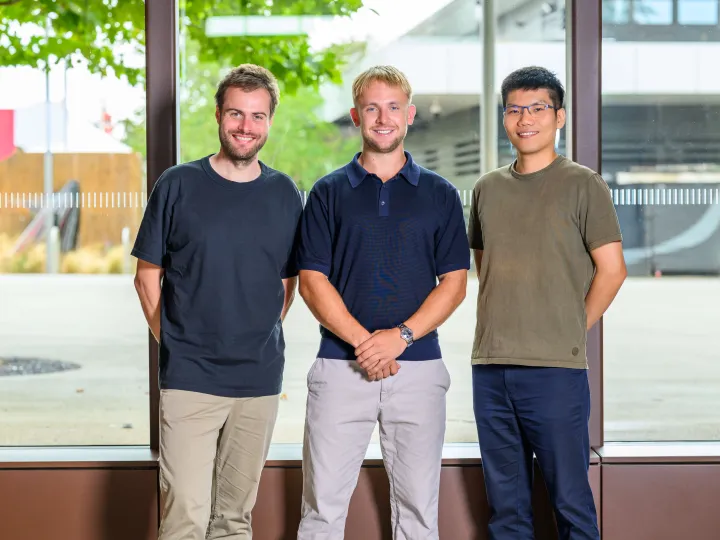
AcouBatt has secured £1.1m in pre-seed funding to tackle one of the biggest challenges in battery manufacturing: understanding what is happening inside a battery cell while it is being made.
The company allows manufacturers, including electric vehicle companies, to detect hidden battery defects in real time, improve safety, reduce waste and accelerate production. The spinout was supported to market by UCL Ventures.
The round was led by Creator Fund, with participation from Ada Ventures. The funding will support the continued development of AcouBatt's technology and the expansion of its pilot programmes with battery manufacturers.
Turning a battery industry ‘black box’ into actionable insight
Demand for lithium-ion batteries is growing rapidly, thanks to their ability to store huge amounts of energy in a small space – but manufacturers still face a major production challenge: limited real-time visibility into the processes inside battery cells without damaging them
AcouBatt assists in the ‘formation’ stage of manufacturing, where a newly made battery is charged and discharged for the first time. During this process, there’s often little visibility into whether the battery is developing correctly, creating delays, waste and safety risks.
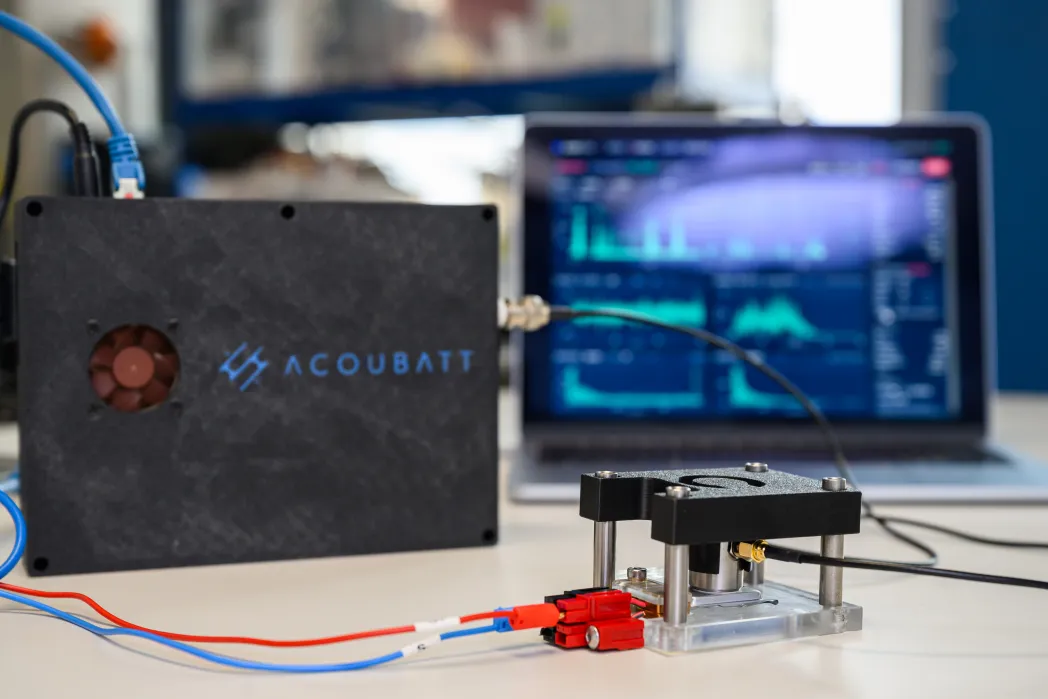
AcouBatt's sensors detect tiny sounds, known as acoustic emissions, which are produced by physical and chemical changes inside a battery cell. The company’s technology combines sensors, data-acquisition hardware and AI-powered analysis software to act like a ‘digital stethoscope’ for batteries, allowing manufacturers to understand what is happening inside each cell without opening it.
The platform then analyses these signals in real time, distinguishing meaningful battery activity from background noise and identifying signs of defects or abnormal behaviour, long before conventional testing methods.
Faster production, safer batteries, less waste
Formation is the first controlled charging and discharging of a new battery and helps establish its performance throughout its lifetime. The process can take up to two weeks, making it a major bottleneck in battery manufacturing.
AcouBatt monitors acoustic emission signals during formation to help manufacturers understand how each cell is developing and identify when key formation processes are complete. This could allow manufacturers to reduce the conservative time buffers built into their protocols, while ensuring the cell has undergone the processes needed for reliable performance.
The spinout says this approach could reduce formation time by up to 30% while maintaining battery performance.
The technology can also flag abnormal behaviour that may indicate a developing fault, supporting manufacturers to identify cells requiring further inspection before they progress through production or enter service, reducing the risk of defective batteries reaching customers.
Identifying problems earlier also gives manufacturers an opportunity to investigate and adjust their production processes before more cells are affected. This could reduce scrap and material waste, while avoiding further processing of cells unlikely to meet quality standards.
Beyond manufacturing, AcouBatt's platform could also be used to monitor batteries throughout their operational lifetime in energy storage systems and electric vehicles, helping operators identify underperforming cells before they become safety or reliability issues.
Built on UCL research
AcouBatt was founded in 2025 by Dr. Arthur Fordham and Chris Haoxin Xu. The technology originates fr more than a decade of battery acoustic emission research at UCL's Electrochemical Innovation Lab, supported by the Faraday Institution and the SafeBatt project.
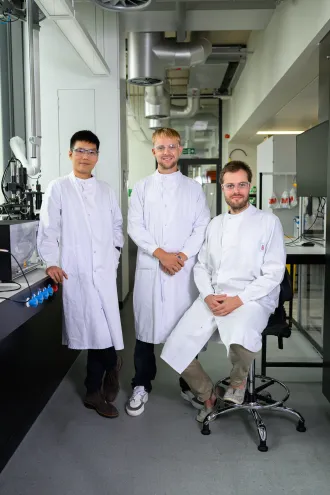
The company combines that research foundation with proprietary AI models designed to translate acoustic signals into useful, actionable information for battery manufacturers.
The technology is currently being evaluated at the UK Battery Industrialisation Centre (UKBIC), the UK's national battery scale-up facility, as the company prepares for wider commercial deployment.
AcouBatt's journey from laboratory research to venture-backed company was assisted by UCL Ventures, which supported the formation of the company and assigned the underlying intellectual property into the spinout, helping create the foundations for commercial growth.
Will Mortimore, Senior Business Manager, UCL Ventures said: "AcouBatt is a powerful example of what can happen when outstanding research is matched with the right commercial support. We worked closely with Arthur to assess the underlying intellectual property, and connected the commercial acumen of Chris with Arthur through our ecosystem, creating the co-founding team. By helping manufacturers understand what is happening inside a battery in real time, AcouBatt is addressing a major challenge for an industry that will be central to the transition to a lower carbon future."
Dr. Fordham, co-founder and CEO of AcouBatt, added: "Batteries are the foundation of modern infrastructure, yet until now much of what happens inside them has remained hidden. AcouBatt gives manufacturers and operators a way to understand battery behaviour in real time, helping them improve quality, reduce waste and strengthen safety throughout a battery's lifetime."
From research to real-world impact
As battery manufacturing becomes increasingly important to economic growth, energy security and the transition to Net Zero, AcouBatt's approach demonstrates how long-term academic research can evolve into practical solutions for major industrial challenges. AcouBatt aims to help manufacturers make battery production faster, more efficient and less wasteful.
If you’re a UCL researcher, academic or clinician at a UCL partner hospital and are interested in exploring how your research can go beyond the university, contact us for a free, confidential, no-obligation chat - whatever stage your research is at.

Dr. Will Mortimore
Senior Business Manager
Dr Will Mortimore is responsible for fostering UCL’s Physical Sciences IP portfolio into commercial opportunities across a broad range of technologies and sectors, with a key focus on Climate
Tech.
Will joined UCL Ventures from the University of Surrey where he managed technology transfer for the faculty of engineering and physical sciences, leading the creation of several spinouts and commercial opportunities. This has been built upon solid international commercial experience as a business development manager for technical products covering a wide range of industries from aviation to medical devices.
Prior to this, Will held a number of materials development roles from a PhD in fuel cells through to product development and scientific consultancy for the power sector.