

From molecular pore to global sequencing technology
How licensing UCL nanopore research helped advance portable, real-time DNA and RNA sequencing.
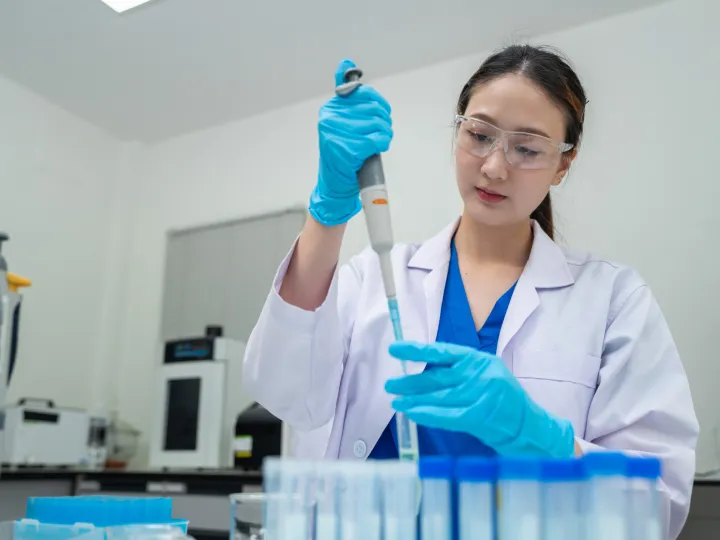
The ability to read DNA and RNA quickly can help researchers understand disease, identify pathogens and investigate the genetic information that shapes living things.
Nanopore sequencing offers a distinctive way to do this: reading individual strands of DNA or RNA directly and producing results in real time.
At UCL, Professor Stefan Howorka, Department of Chemistry, co-developed CsgG nanopore technology with Prof Han Remaut's lab at Vlaams Instituut voor Biotechnologie; this was subsequently licensed to Oxford Nanopore Technologies (ONT) and incorporated into its sequencing technology.
The journey from university research to commercial application shows how finding the right route to market can help an innovation go further…
What is a nanopore?
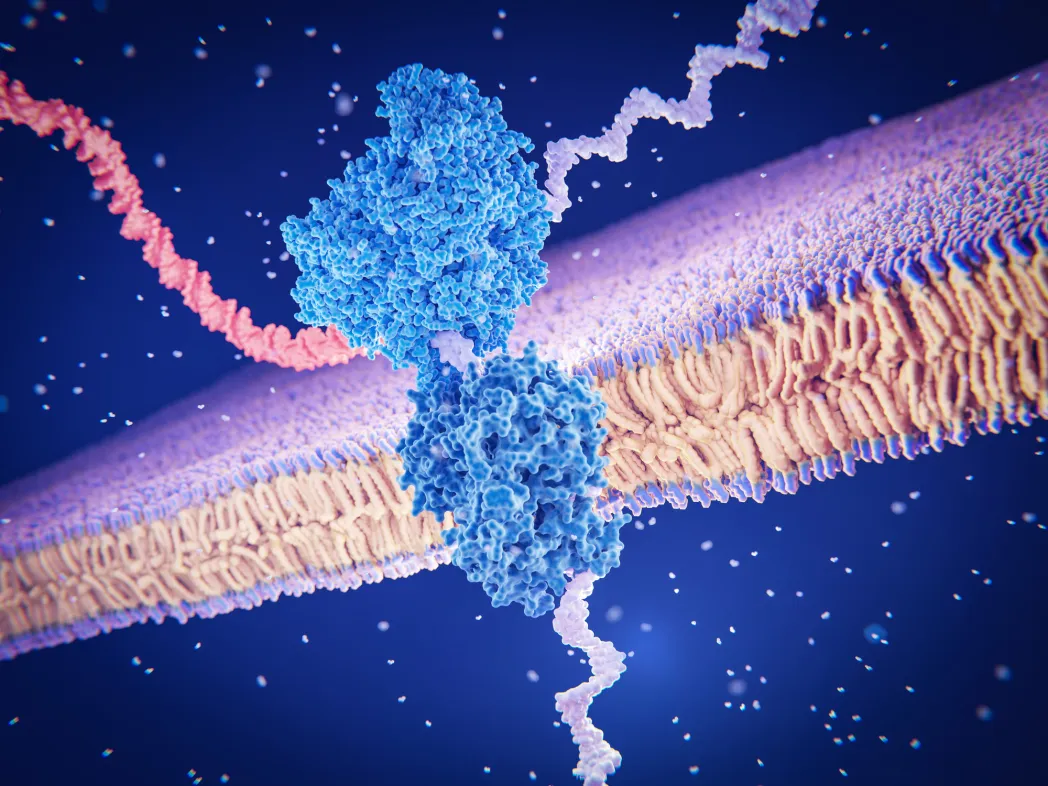
Nanopores – as the name suggests – are pores that are just a nanometre wide. Some nanopores are proteins that form channels in biological membranes, while others can be manufactured in materials such as silicon or graphene.
For DNA and RNA sequencing, nanopores can work as single-molecule detectors. Put simply, they help us to ‘read’ the genetic information contained within an individual molecule as it passes through the nanopore and an electrical current. Software can then measure and interpret these changes to determine the genetic sequence.
Problem to be solved
Some sequencing approaches can struggle to resolve long or structurally complex regions of DNA. Other applications for DNA/RNA sequencing also require results more quickly and outside of a conventional laboratory setting.
Solution
Nanopore sequencing provides a different approach: individual, long molecules can be read directly as they pass through the pore, with genetic sequence data generated in real time.
CsgG has characteristics that make it particularly well suited to nanopore sequencing. Its molecular structure enables individual DNA or RNA molecules to pass through the pore while changes in electrical current are measured and decoded.
This supports long-read analysis, real-time results and portable sequencing, enabling genetic material to be analysed in a wide range of settings.
This real-time capability has been particularly valuable in infectious-disease surveillance, helping researchers track emerging pathogens and inform public-health responses.
This combination meant nanopore sequencing was used to determine 50% of SARS-CoV-2 genomes in Africa, and 25% globally.
How did licensing CsgG help Oxford Nanopore Technologies?
Licensing CsgG nanopore technology in 2016 gave ONT a pore with stable electrical signals that could improve sequencing speed and accuracy and help strengthen the performance of the company’s commercial platforms.
ONT had already spent around a decade developing the wider technologies needed for DNA nanopore sequencing, including miniaturising sequencing reactions within portable devices capable of running thousands of sequencing reactions in parallel. CsgG could therefore be incorporated into an established sequencing platform and developed as part of ONT’s wider technology.
ONT has since incorporated CsgG into a range of its commercial products, including the portable MinION sequencing device, which has also been used aboard the International Space Station.
How did UCL Ventures help with this licensing project?
UCL Ventures worked with Prof Howorka to assess the technology, its potential applications, and the wider market before identifying licensing as the appropriate route.
Early patent filing helped secure a priority date for the intellectual property, while UCL Ventures supported the necessary IP arrangements before the technology was licensed to ONT.
Generally, licensing suits focused technologies with clear applications, particularly where they can fit within an existing company's product roadmap. In this case, licensing CsgG meant the nanopore technology could be developed by ONT, which already had the technology and infrastructure. This allowed Prof Howorka to remain focused on his research.
The academic experience
Professor Howorka said: “I truly enjoyed seeing the journey from scientific innovation over licensing to technology development, product innovation, and societal impact.”
Team

Prof Stefan Howorka
Academic inventor
Professor Howorka studied Biochemistry at the University of Vienna and carried out his PhD work on bacterial S-layer proteins under the supervision of Prof. Werner Lubitz at the Vienna BioCenter and Prof. Hagan Bayley at Texas A&M University. Stefan's postdoctoral training was on membrane protein nanopores and their rational redesign into biosensors at Prof. Bayley in Texas. He joined UCL in 2005 and was promoted to Professor in Chemical Biology in 2016.

Dr. Barny Cox
Senior Business Manager
Dr Cox is responsible for assisting in the commercial exploitation of IP arising from UCL’s departments of Medicine, Structural and Molecular Biology, Infection and Immunity, Chemical Biology,
Biochemical Engineering, Medical Physics and BioEngineering, Epidemeology and Health and Psychology and Language Sciences.
Prior to joining UCL Ventures, Barny was a technology transfer manager at Queen Mary Innovation, where in addition to acting as a director on the board and company secretariat to a Queen Mary, University of London spinout, he gained a wealth of experience in the commercialisation of a broad portfolio of healthcare and other life science-related technologies, assisting in the patent prosecution of new commercially-viable innovations, the acquisition of translational funds and successful marketing, negotiation and execution of a number of out-licensing deals.
Barny has previously held positions with the British Medical Association and two internationally-acclaimed patent and trademark firms, where he gained a thorough grounding in intellectual property prosecution.
He completed an MRC Career Development Fellowship at the National Institute for Medical Research in the field of developmental neurobiology, studying the morphogenic Sonic Hedgehog signalling cascade in mammalian neural tube cell-fate specification and holds a doctorate awarded by UCL.