UCL Ventures Navigate back to homepage
Find your Business Manager

Main navigation

  • Your route to market

    Your route to market

    We guide UCL academics, researchers and clinicians to get their research to market.

    Disclose an idea
    • Getting started An introduction to commercialisation and next steps
    • Our collaborative approach How we work with you to get to market
    • What you can expect Demystifying the process of commercialisation
    • Options to move forwards Explore the different pathways to market
      • Protect your idea
      • Create a company
      • Licensing your invention
      • Routes to social impact
    • Funding & support The financial and practical help that we can offer
      • Help managing your project
      • Training & tools
      • Common questions
  • Explore innovations

    Explore innovations

    Our portfolio and technologies span AI and quantum, to gene therapies to consumer products.

    • Spinout portfolio Browse our portfolio of spinout companies, based on UCL research
    • Our expertise & pipeline The sectors we span and therapeutics in development
    • Social Ventures Ventures driving impact in communities
    • License a technology Opportunities & collaborations with UCL's world-class research
  • Global impact

    Global impact

    How UCL research is changing the way the world lives, works and thrives.

    • Inspiring stories Real-world impact and successes, supported by UCL Ventures
    • Impact Report Our annual report showcases how UCL research is going beyond the university
    • Supporting innovation at UCL Understand our role in the innovation ecosystem
  • Investors & business

    Investors & business

    Opportunities for collaboration across UCL's world-class research.

    • Why partner with UCL Ventures With over 30 years in commercialisation, we have a strong track record
    • Our portfolio View our spinout companies across all sectors
  • News & events

    News & events

    The latest news and events from our team and portfolio.

    • News & views Stay up to date with the latest insights and announcements
    • Events Where you can find us across UCL and external events
  • Get in touch

    Get in touch

    Contact our team of experts for all your queries and needs.

    • Speak to the team Choose your enquiry type to reach the right team
Find your Business Manager

Eye2Gene: using AI to speed up diagnosis for inherited eye diseases

Giving patients answers about their sight loss in weeks, not years.
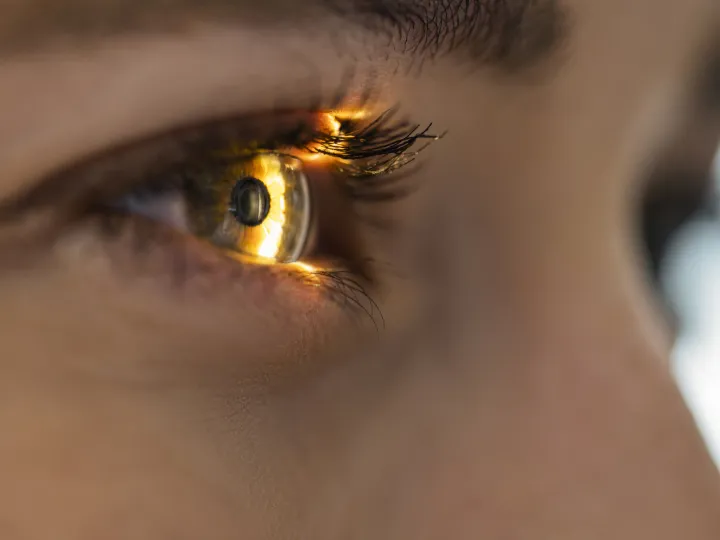
Light shining onto the eye for a retina check

Breadcrumb trail

  1. Home
  2. Inspiring stories
  3. Eye2Gene: using AI to speed up diagnosis for inherited eye diseases

Inherited retinal diseases (IRDs) can cause severe vision loss or even blindness, and affect millions globally. For most of these diseases, there are no effective treatments.

IRDs are an incredibly diverse group of conditions, linked to more than 400 genes, including two common instances:

  • Retinitis Pigmentosa (RP), which typically begins with night blindness followed by the loss of peripheral vision,
  • Stargardt Disease, a form of inherited macular dystrophy that commonly affects central vision.

Problem to be solved

Despite significant improvements in genomic medicine, diagnosing an IRD is difficult, even for the most knowledgeable of clinicians, as most belong to the rare eye disease category (fewer than 200,000 people are affected).

Different mutations in the same gene can cause wildly varying symptoms, but symptoms can also overlap from one condition to another, appearing visually similar in imaging. 

Given this complexity, patients can wait on average 6.4 years to understand the condition they have and often face barriers accessing specialised genetic testing – all while their sight continues to worsen, with no plan or understanding of the prognosis and what might come next. 

Solution

Eye2Gene applies AI to retinal scans to enable a higher level of precision analysis than traditional methods. The platform – based on research from the UCL Institute of Ophthalmology – then generates a list of likely genes involved, ranked by their likelihood, and helps clinicians prioritise genetic testing.

By supporting clinicians’ existing expertise, the spinout’s technology helps to confirm the mechanisms, or process, of the disease and identify the mutation that caused the IRD.

This means an accelerated diagnosis process for patients, receiving answers in weeks, rather than years. Timely diagnosis can prevent further vision loss through earlier interventions, where they are available, and lead to improved long-term outcomes. 

How UCL Ventures helped

UCL Ventures partnered with Dr Nikolas Pontikos and Professor Michel Michaelides to explore the commercial potential of the technology and identify the best route to take it forward.

The team assessed the clinical opportunity and helped shape how the technology could be positioned, including building the evidence around its potential to scale within the clinical trials environment. This work helped establish the case for creating a spinout company.

Alongside managing the intellectual property, UCL Ventures supported the team in navigating the regulatory considerations around the use of AI and the products and services the new company could offer.

The support did not stop at the point of spinning out: we helped with introductions to the investor world, including at both 2025 and 2026 London Life Sciences Week, where Eye2Gene pitched their technology to a room of investors.


Team

Dr Nikolas Pontikos

Co-founder and CEO

Associate Professor at the Institute of Ophthalmology, working at intersection of genetics, imaging and text data to develop decision support systems for precision diagnosis, prognosis and treatment.

Dr. Mark Fisher

Associate Director

Dr Fisher has management responsibility for the BioPharm patent portfolio and strategic business support for the BioPharm team. At the coalface, Mark manages the commercialisation of technology from the Institute of Ophthalmology and Moorfields Eye Hospital UCL Global Business School for Health and the Department of Ageing, Arthritis and Regenerative Medicine.

He holds a first degree in Industrial Biology and a PhD in Biochemistry and Molecular Biology from UCL, in association with one of the first biotechnology companies to be established in the academic sector.

Mark brings more than 30 years of experience in life sciences and healthcare licensing, new company development and securing investment from both the public and private sectors to his team. To date, Mark has been responsible for the establishment of more than 25 new businesses in diagnostics, drug discovery, medical devices and therapeutics.

As a certified lead auditor of ISO 13485, Dr Fisher has additional experience in quality management systems and the translation of technologies from research and design into manufacture at home and abroad.

Mark is a Freeman of the Worshipful Company of Management Consultants and gained the Freedom of the City of London in 2010 for his contribution to the economy through new business development.

  • LinkedIn

UCL Ventures footer

About UCL Ventures

  • Our people
  • What we do
  • Who we are
  • Our culture

Forms & Resources

  • Publications and downloads

Accreditations

  • Cyber essentials
    cyber essentials logo
  • Living wage
    living wage employer logo
UCL Ventures

UCL Ventures Limited (Company Registration No: 02776963) is a wholly-owned subsidiary of University College London. 

Registered office: 
University College London
Gower Street
London
WC1E 6BT

UCL social media menu

  • Link to Linkedin
Back to top

Legal

  • Cookie policy
  • Freedom of information
  • Privacy policy
  • Rules of website use

© 2026 UCL Ventures Limited